 EN
EN

Modern gyms are evolving rapidly, and hybrid strength training systems are at the center of that transformation. These systems combine free weights, machines, and functional equipment to create well-rounded programming for athletes at every level. Within this ecosystem, dumbbells occupy a uniquely flexible role that no single fixed machine can replicate. Understanding how dumbbells contribute to hybrid training helps gym owners, coaches, and athletes design more effective, scalable workout environments.
Hybrid training is defined by its intentional blending of modalities. Athletes use dumbbells alongside barbells, cable machines, resistance bands, and bodyweight exercises to develop strength, stability, and conditioning simultaneously. Because dumbbells introduce unilateral loading, free range of motion, and scalable resistance, they serve as a critical connective tissue across all phases of a hybrid program. This article explores exactly how dumbbells support and enhance hybrid strength systems in commercial gym settings.
The Structural Role of Dumbbells in Hybrid Programming
Bridging Bilateral and Unilateral Training
Hybrid strength programs typically alternate between bilateral movements, such as barbell squats and deadlifts, and unilateral movements that target individual limbs. Dumbbells are the most practical tool for executing unilateral work. A single-leg Romanian deadlift with dumbbells, for example, isolates the posterior chain on each side independently, correcting imbalances that bilateral barbell work might mask. By incorporating dumbbells into every training block, coaches ensure that athletes build symmetrical, functional strength rather than compensating with dominant-side patterns.
Because dumbbells allow each limb to move independently, they challenge stabilizing muscles in ways that fixed machines cannot. This stabilizer activation is central to hybrid training philosophy, which values not just peak force output but also joint integrity and movement quality. Dumbbells thus act as a bridge between the raw loading of compound barbell lifts and the controlled isolation of machine-based exercises, giving hybrid programs their characteristic depth.
Scalability Across Athlete Profiles
One of the most practical advantages dumbbells offer in a commercial gym is their scalability. Dumbbells are available in increments as small as one or two kilograms, allowing trainers to prescribe precise loading for beginners, intermediates, and advanced athletes within the same session. In hybrid systems where multiple athletes train simultaneously under one roof, this scalability means every individual can access a version of the same movement pattern at the appropriate resistance level. Gym operators who invest in a full range of dumbbells enable their facility to serve a far broader membership base.
How Dumbbells Enhance Key Hybrid Training Methods
Supporting Circuit and Complex Training Formats
Hybrid strength programs frequently incorporate circuit training and barbell or dumbbell complexes, where athletes perform multiple exercises in sequence without setting down the equipment. Dumbbells are particularly well suited to this format because they are compact, easy to transition between exercises, and available in matched pairs. A single pair of dumbbells can facilitate a full-body circuit covering pressing, rowing, lunging, hinging, and carrying patterns. This efficiency is highly valued in commercial gym settings where floor space and transition time both affect member experience and programming quality.
When dumbbells are incorporated into metabolic conditioning blocks within a hybrid program, they add resistance to cardiovascular-driven formats without requiring the setup time of a barbell. Movements such as dumbbell thrusters, farmer carries, and renegade rows are staples of hybrid conditioning work precisely because dumbbells allow athletes to maintain tension and load across a wide variety of movement planes. This multi-planar capability sets dumbbells apart as a genuinely versatile tool in any structured training environment.
Integrating Dumbbells with Machine-Based Phases
Many hybrid programs are structured in phases, with each phase emphasizing different equipment combinations to deliver specific training stimuli. During hypertrophy-focused phases, dumbbells are paired with machines to maximize time under tension and muscular isolation. For example, a chest development phase might combine a machine chest press for primary loading with dumbbell flyes for stretch-emphasis overload. This pairing strategy leverages the unique force curve of dumbbells to complement what machines deliver, producing a more complete stimulus than either tool achieves alone.
Dumbbells also allow gym programmers to create superset and pre-exhaustion sequences that flow naturally within a hybrid format. Because dumbbells are immediately accessible and require no adjustment between sets, athletes can move from machine-based compound work to dumbbell accessory work within seconds. This structural fluidity is a defining characteristic of well-designed hybrid programs, and dumbbells are central to making it operationally feasible in a busy commercial gym.
Selecting and Placing Dumbbells for Hybrid Gym Environments
Equipment Selection Criteria for Commercial Facilities
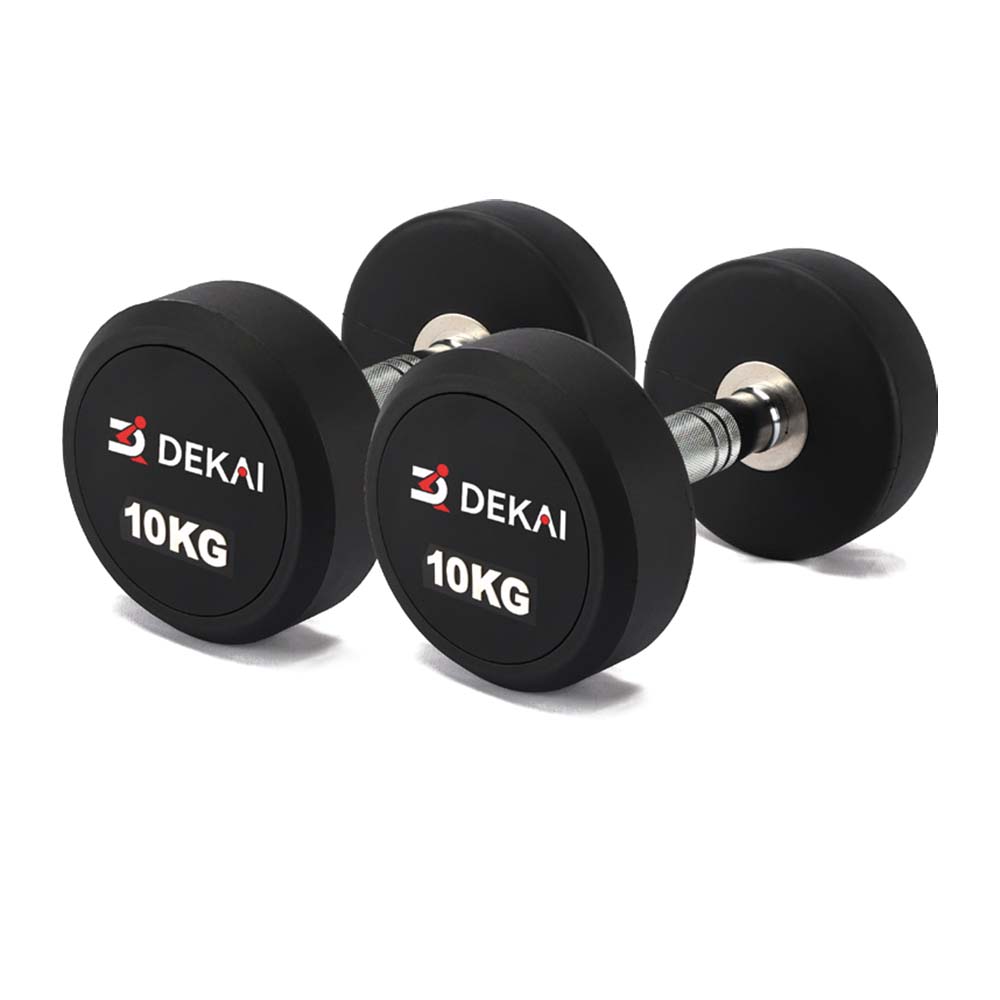
For commercial gyms that support hybrid strength training, the quality and range of dumbbells directly affect programming options. Rubber-coated dumbbells are widely preferred in high-traffic environments because they withstand repeated drops, protect flooring, and maintain structural integrity under heavy daily use. Hex-shaped dumbbells prevent rolling hazards and stack efficiently in rack configurations, which is important when floor space must accommodate multiple training zones simultaneously. Gym operators selecting dumbbells should prioritize durability, ergonomic grip design, and a weight range that spans from entry-level loads to competition-grade resistance.
The weight range of dumbbells stocked in a hybrid gym should reflect the membership profile and programming goals. A facility running structured hybrid programs should carry dumbbells from approximately two kilograms up to at least fifty kilograms, ensuring that every major movement in the program can be loaded appropriately. Gaps in available weights force athletes to make suboptimal loading choices, which reduces training quality and increases injury risk. Investing in a complete dumbbell range is therefore not a luxury but a programming necessity for gyms committed to serious hybrid strength systems.
Rack Placement and Training Zone Design
The placement of dumbbell racks within a commercial gym significantly influences how effectively dumbbells integrate into hybrid training flows. Ideally, dumbbells should be positioned adjacent to open floor space, cable columns, and bench stations so that athletes can execute complex multi-tool sequences without navigating congested pathways. Well-designed training zones that center on dumbbells as a shared resource allow hybrid programs to run efficiently even during peak hours, maximizing the utility of every pair of dumbbells in the facility.
FAQ
Why are dumbbells considered essential in hybrid strength training?
Dumbbells provide unilateral loading, free range of motion, and scalable resistance that complement machines and barbells. These qualities make dumbbells indispensable for addressing movement imbalances, activating stabilizer muscles, and enabling seamless circuit and complex formats within hybrid programs.
What weight range of dumbbells should a hybrid gym stock?
A commercial gym supporting hybrid strength training should stock dumbbells from approximately two kilograms to at least fifty kilograms. This range ensures that athletes of all levels can access appropriate loading for every movement pattern in the program, from warm-up exercises to heavy accessory work.
How do rubber dumbbells differ from other types for gym use?
Rubber dumbbells are designed to withstand repeated drops and heavy daily use in commercial environments. Their coating protects flooring, reduces noise, and extends the lifespan of the equipment. For gyms running high-volume hybrid training sessions, rubber dumbbells offer a practical and cost-effective long-term solution compared to bare iron or chrome alternatives.